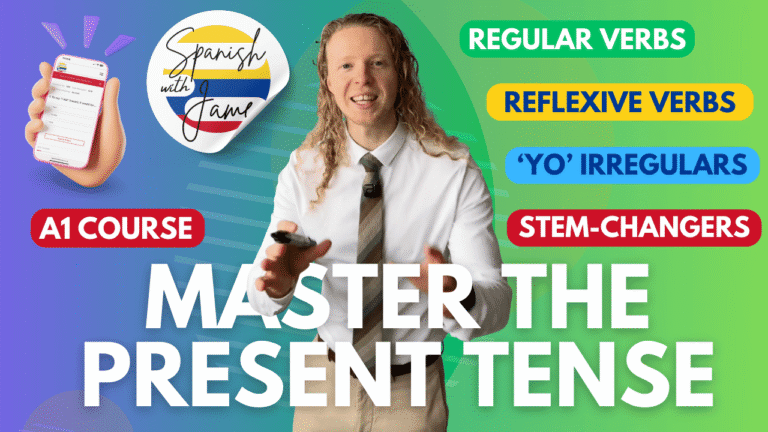


The present tense is where most learners start when it comes to learning how to conjugate verbs in Spanish, and learning the AR, ER and IR endings instantly unlocks hundreds of new ways to express ideas in Spanish. Though it’s one of the ‘friendlier’ tenses, which people often quickly move on from, it does contain a great many irregular verbs which many neglect to learn before moving onto the other tenses.
Note: irregular simply means the verb doesn’t follow the usual pattern or rules for verbs – some verbs are irregular in one tense, and perfectly regular in another!
Many Spanish verbs are only irregular in one form of the present tense: the ‘yo’ (I) form, and then they follow the usual patterns in all of their other conjugations. Others are stem-changing verbs, whose irregularity is not in their ending, but in the verb stem (the bit that is left when you remove the AR, ER or IR from the infinitive verb, the neutral, ‘to ___’ form of the verb).
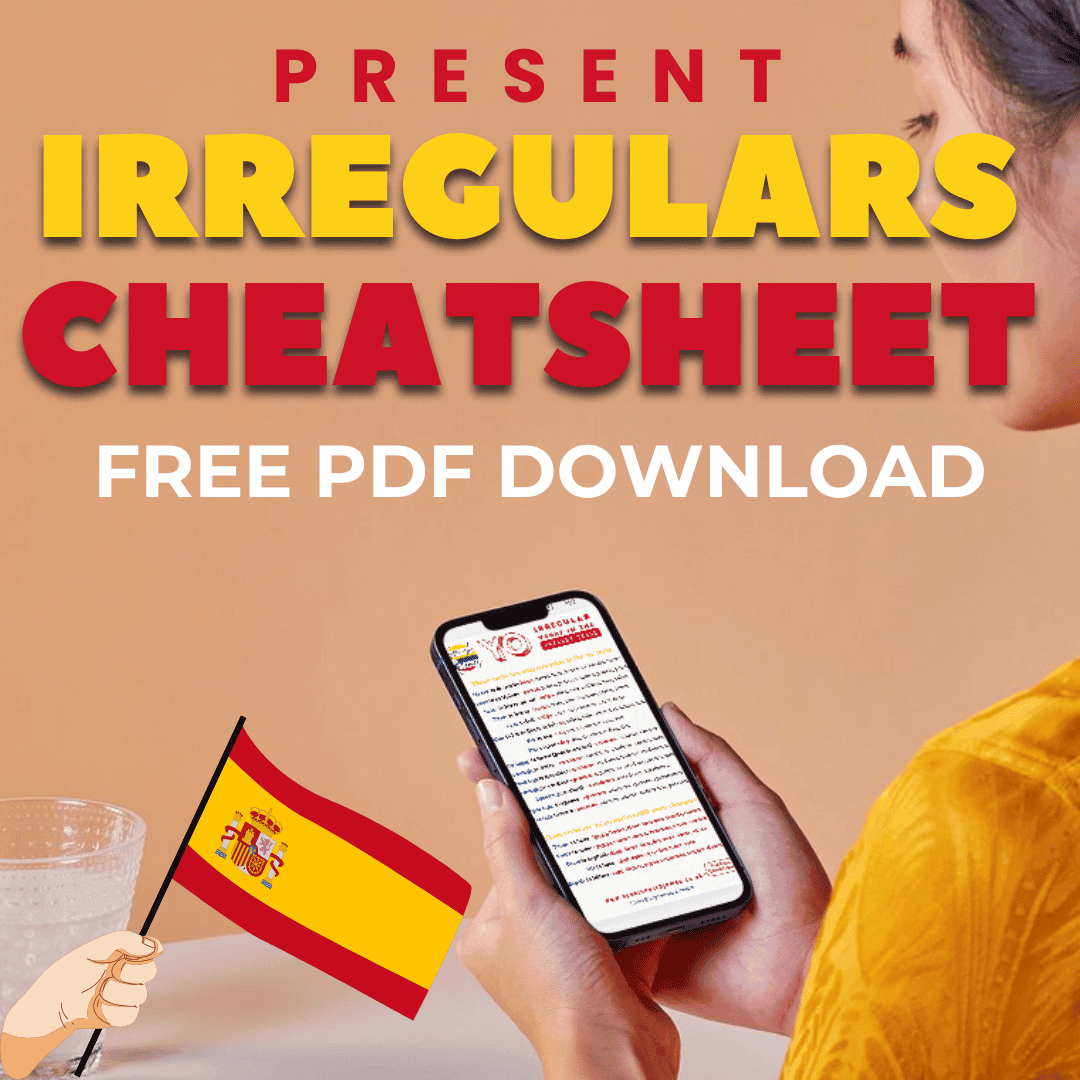
To help you learn some of the key ‘yo’ irregulars and stem-changing verbs, I have put together this useful reference sheet which you can download for later reference. The irregular verb forms are in red!
Notice that all of the verbs endings in -CER or -CIR follow the exact same pattern; their ‘yo’ form ends in -ZCO. There are many more examples of these verbs, and they always have this spelling change in their ‘yo’ form of the present tense – 100% of the time!
Spanish grammar is all about the patterns… The better you are at spotting them and remembering them, the quicker you will become confidence using different verb forms!